Loss Of A Pet
How To Come To Terms With The Grief
The loss of a pet cat can be a very distressing time.
I personally found it very hard and it was made more difficult because I felt that I couldn't talk about it to anyone as they would think I was silly being so upset over a cat.
Well my fellow cat lovers, we know different. It is very important to support someone after experiencing the pain of pet loss and to make them feel that mourning is the natural and right thing to do.
After living with a cat for many years you get to know that fur person very well indeed and when they do finally pass away it's just like losing a close member of the family.
Grieving is a very important thing to do in these circumstances as with losing anyone it helps you to come to terms with the loss of a pet and move forward.
On This Page:
Coping With The Loss Of Your Cat
Remembering Your Cat With A Personalized Pet Memorial
Coping With The Loss Of A Pet
Grief can affect people in different ways, you may become so sad and despondent that you forget to look after yourself during this mourning period. But you must give yourself tools to keep yourself going through this sad time. Here are just a few suggestions to keep in mind that may help you to get through your grief.
- Don't forget to eat regularly. You may get so wrapped up with your grief that you forget the simple every day things. You may even lose your appetite but it is important to keep your strength up.
- If you feel like crying then cry. It's good for you. Your true friends and family will understand.

- Keep active if possible. Try to divert your thought by doing something that you have been putting off, like washing the car or gardening.
- Don't neglect any other pets you may have. They will feel left out if you suddenly stop paying them any attention. Don't forget they may also be missing their friend as well.
- Remember how happy you and your cat were together and be thankful that they lived a good life with you. If you believe in an afterlife, be thankful that they are now happy and healthy again on the other side.
- Don't keep your emotions bottled up. If you need to talk about your loss of a pet cat, then there are many professional support groups which can give advice or simply be a kind, listening ear.Or you can even send us an email expressing how you feel. It doesn't matter how long or short it is, it will be good for you to express your emotions. We will always have a sympathetic ear and will respond to you personally, to show you that we care.
Remembering Your Cat With A Personalized Pet Memorial
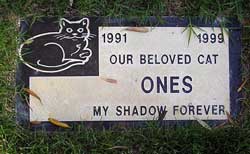
Perhaps doing something to remember your cat will help you through the grieving process.
For example, you could:
- Make a charitable donation on behalf of your pet
- Have a piece of jewellery made to remember your cat by
- Plant a tree or bush, perhaps in their favourite part of the garden
- Have a pet memorial made
- Hold a special funeral or pet memorial service.
The 5 Stages Of Grieving
These stages are universal with all different types of grief including pet loss and are experienced by all nations of the world.
Each stage may take different lengths of time for each person, but recognising that these stages are normal will help you to understand the feeling you are going through and reassure you that you're not going mad.
- Denial - When the loss of a pet first happens we may try to block out the reality that they are gone. This is a defence mechanism designed to cushion the blow of the news. It is only a temporary emotion and we will start to accept that our cat has passed away.
- Anger - Our next emotion is anger, why did this happen, I don't want this to happen, who's fault is it? The anger may be expressed towards many different people and things, even your dead pet may be blamed. We then feel guilty for blaming our pet as we know it was not their fault, this pain is then expressed as more anger.

- Bargaining - We may feel helpless after the loss of a pet and the normal response to this is to try and regain control of the situation. We try to reason with ourselves that if this or that had been done then our pet may not have died, or that they will get better and will not need to be euthanized.Unfortunately, this is just a postponing tactic to try and protect us from the truth.
- Depression - There can be two types of depression. One is a sense of worry (for instance, about the costs of vet bills or that we are neglecting other family members). The second is the sadness arising from the actual loss of a close friend. During both types of depression the best cure is for friends and family to rally round and provide reassurance and plenty of hugs.
- Acceptance - This final stage of mourning is not always reached by those who cannot let go of their anger or denial. However when it is reached you may feel a sort of calm and want to be alone with your thoughts. This is not a depression but an acceptance of the reality of pet loss and gives you time to reflect on the situation and to plan for the future.
Explaining The Death Of A Pet To A Child.
Often the loss of a pet is the first time a child may experience death and many feel that it important for them to have a positive view of death as it will help them in the future with death of a family member.
Here are some simple guidelines when talking to your child about pet loss:
- It is important to be honest with your child, if you are not it will become very confusing for them and perhaps even frightening when they do hear the truth from someone else i.e. a school friend.
- Always use the actual words for death i.e. dead and dying and not things like going to sleep etc. Children have very fertile imaginations and this might make them scared to go to sleep at night.
- If possible explain to your child BEFORE you lose a pet about death. It will help them prepare for the situation and will be less distressing if they understand what is happening at the time.
- There are a few good books written for children about death which you can both read in preparation for a death. Children respond very well to pictures especially in a format they are used to like a storybook.
- Children will react differently at different age groups and their reaction may manifest itself in strange ways, like burying toys, drawing pictures of their dead pet underground and asking sometimes very distressing questions, for instance "what is happening to the cats body underground".
- These are normal responses and should be spoken about frankly and honestly, in a reassuring way.
- Don't be afraid to cry in front of your child after the loss of a pet. It will help the child to understand that everyone misses the cat and that it is OK to feel sad and cry.
I hope you have found these few tips helpful. If you are experiencing the pain of the death of a pet then please remember that many people will understand what you are going through and that there is support out there.
Please read my other pages all about Pet Loss and Pet Memorials for more information.
Top of this Loss Of A Pet Page
I'd love to hear what you think of this page or my site. Let me know if you like what you have read or if it has helped you with a problem.
It's easy to do just leave a comment in the box below and click the like / share or +1 to let others know about my site. Thank You It really is most appreciated.
FYI: As an Amazon Associate I earn from qualifying purchases.
Follow Our Happy Cat
Follow Us

Search This Site

Recent Articles


-
Smokey my cat
Mar 20, 24 02:32 PM
 Smokey is very laid-back and his personality shows for itself. Loves to lounge and sit with me when he explores around outside because of his curiosity



New! Comments
Have your say about what you just read! Leave me a comment in the box below.