Cat Scratching Post Training Tips
To Help Protect Your Furniture
Buying a cat scratching post is one way to help protect your furniture from being shredded and ruined by your delightful kitty, but how do you make sure they actually use it?
Remember cats use scratching as a way to mark their territory as well as to look after their claws.
When we brought our first cat Little Mo back from the rescue centre, she was so happy to finally be back in a home environment that all she wanted to do was to make it her own.
We hadn't yet bought her a scratch post and she then proceeded to shred our chairs, sofa's, door frames, carpets and duvets, in fact anything that was she could leave her mark upon.
Don't make the same mistake as us. By not providing Mo with her own cat scratching post and showing her that it was a good thing to use, we instantly made every other item in the house a target for her dreaded sharp claws.
Quick Guide to this page:
- Cat Training Tips For Using A Scratch Post
- Cat Training Products To Help Protect Your Furniture
- Choose The Best Scratch Post For Your Cat And Your Home
Cat Training Tips For Using A Scratch Post
Obviously the best time to train your pet is when they are still kittens. This will hopefully prevent them from getting into any bad habits.
But don't worry if you do have a cat that is already scratching the furniture, it is possible to break this habit and train them to use a scratch post.
- Step 1. Make sure that you choose a cat scratching post that is safe, fun and the right size for your cat and your home (see more below).
- Step 2. Make sure you place the post near to where your cat sleeps or eats. Generally it is after sleeping or eating that they like to sharpen those claws. So make it the first thing available to them at these times.
- Step 3. Never try to push your cats claws into the post as a demonstration. This will only frighten them. The best way is to get their attention and then scratch the post yourself. Do this often (even if you do feel a little silly), your cat will soon get the message and copy your actions.
- Step 4. Lay the post down on the floor if possible and encourage your cat to play around it with you. For example, you could drag string along it, which will encourage them to scratch the post. Always remember to praise your cat when they do this.
- Step 5. If you are training an adult cat, you could try rubbing catnip onto the post, or placing catnip toys around it.
Cat Training Products To Help Protect Your Furniture
Some kitties will of course love their new cat scratching post but will see no point in giving up their favorite habit of scratching your furniture.
When this is the case there are still a few tricks up your sleeve in the war against shredded furniture.
Sprays - There are sprays on the market that are safe for you to use on your furniture to make it less appealing to your cat. Your cat is far more sensitive to strong smells than we are and the natural scents in these sprays simply deter your cat from scratching in the areas you choose to protect.
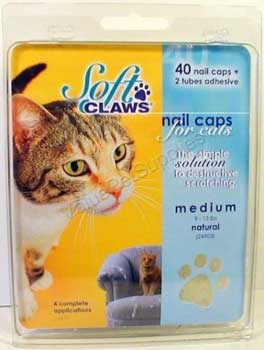
Cat Claw Covers - There are suppliers of special little plastic cat claw covers that fit over each claw and stop your cat from damaging the furniture. Some people also like to use them if they have a cat that has a tendency to scratch people.
Cat claw covers do not hurt or harm the claw and are recommended for indoor cats that do not go outside.
A video of the process can be found on www.catworld.tv.
(PLEASE NEVER HAVE YOUR CAT DELAWED, IT IS INHUMANE).
Sticky Paws - This product is basically sticky strips which can be attached to the legs and arms of furniture that when the cat tries to scratch there it doesn't like the sticky sensation on its feet and so makes that spot unappealing to your cat.
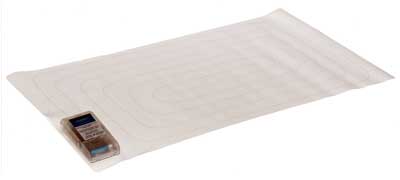
Scat Mat - (or should I call them scatter mats for us Brits). These are devices that can be placed on the backs of furniture or work surfaces where you do not want your cat to walk on.
The Scat Mat produces a tiny electric shock (like static) which, although harmless, will deter your pet from that area.
I had never seen these mats before and my first reaction was "isn't that a little cruel?" But thinking about it and knowing that some cats can be very determined to claw the furniture, then something like this that won't hurt them at all, could be the answer.
Cat Scratching Posts Come In All Shapes and Sizes.
Visit our Scratching Post page to see some of the best examples of the wide variety of different types of post that are available.
Make sure you consider:
- Space - where are you going to put the post in your home? Some can be quite large and a strange shape so make sure that you will have space for it.
- Safety - make sure that the post is sturdy enough for your cat or cats. It should not wobble and it should be heavy enough that it cannot be pulled over by your cat when they are using it. If you have a large breed like a Main Coon, you will need to get a heavy duty scratching post.
- Fun - Think about how your cat will use the post and how will they get the most enjoyment out of it. Make sure that the post is covered with a material such as rope which is very durable but also has a good texture for your cats claws to get stuck into. Some posts also have toys, climbing platforms and hidey holes attached which add to the fun.
Patience is a virtue!
Yes I know it can be boring to repeat cat training techniques over and over again, but if you really want to save your furniture from your cat's dagger like claws, then patience and persistence are the order of the day.
Remember, never scold your cat and always praise good behaviour. This is how your cat will learn that their scratching post is the best place to exercise those claws.
Top of this Scratching Post Page
I'd love to hear what you think of this page or my site. Let me know if you like what you have read or if it has helped you with a problem.
It's easy to do just leave a comment in the box below and click the like / share or +1 to let others know about my site. Thank You It really is most appreciated.
FYI: As an Amazon Associate I earn from qualifying purchases.
Follow Our Happy Cat
Follow Us

Search This Site

Recent Articles


-
Smokey my cat
Mar 20, 24 02:32 PM
 Smokey is very laid-back and his personality shows for itself. Loves to lounge and sit with me when he explores around outside because of his curiosity


New! Comments
Have your say about what you just read! Leave me a comment in the box below.