Lost Cats and Found Cats
What To Do
Lost cats and found cats - Practical Steps to take when looking for your lost pet and also what to do if you find a cat.
Your first step should always be to try and minimise the risk of losing your cat or at least make it easier to trace your cat if they do wander off. Ensure your pet always carries identification.
A microchip will help animal shelters and vets find out who the cat is and where they live, or a cat collar with an up to date ID tag.
What To Do If You Lose Your Cat.
Step One
- First make sure your cat is really lost. Sometimes something may have scared your cat and they are just hiding somewhere, or they have managed to get in somewhere where they can not get out of again. So check inside the house thoroughly i.e
- Check every room.
- Heating ducts.
- The Chimney.
- Behind bookcases and other furniture, even open drawers.
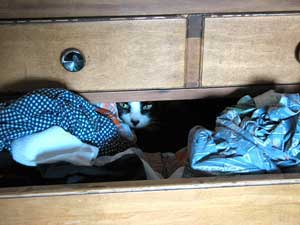
- In Boxes, washing machines, dish washers etc.
- Wrapped up in the bottom of curtains or in a duvet.
- In torn furniture, such as mattresses or swivel chairs.
- Outside buildings such as greenhouses and sheds.
It’s amazing how small a space your cat can get into and many lost cats weren't really lost at all.
Step Two
- Tell your neighbours and ask them to check their out buildings. Also if you have had any visitors to your house, like the postman or milkman.They may have just climbed into their vans by accident. Well you know how nosey they can be.
Step Three
- Contact local vets to see if your pet has been injured and taken in for treatment or to see if any lost cats have been reported to them.

Step Four
- Inform your local police station. They will often receive reports from people if a cat is found. Also contact all local animal shelters and cat rescue centres.They may have a list of lost pets found in your area and they will be able to log your cats details in case he turns up.
Step Five
- Put posters and flyers up locally in shops and public places (if allowed). Include a photo if possible with details of any distinguishing features your lost cat may have and when and where he was lost.
Step Six
- Search your local area on foot day and at night. Your cat may be frightened and is in hiding and may come out at night when they feel safer. You may have to cover some distance as cats territory can be up to a mile from their home.
Call their name or squeak their favourite toy. Don’t worry about feeling daft. Also listen for their cries in case they are trapped somewhere.
Step Seven
- Check online lost and found cat registers, both local ones and nationally. It has been known for cats to turn up hundreds of miles away.
Finally, don’t give up hope. Lost cats are very resourceful and can find food and water when they need to. Our cat Mo disappeared for three days when we first had her. She turned up safely and looking as if she had had a thoroughly good time exploring her new world.
What Should I Do When you Find A Cat

Firstly make sure the cat is lost, it may be a new pet for one of your neighbours. Ask around to see if anyone recognises the cat.
You could even put a paper collar on it with a note saying “ is this your cat, if so please call this number”. But if after a day or so the cat is still hanging around looking for food and shelter then follow these steps.
- If the cat is injured, take it to the nearest vet for treatment.
- If the cat is hungry, please feed it and provide it with some water (not milk).
- Provide it with somewhere to temporarily sleep inside or out.
- Contact your local vets, animal shelters, cat rescue centres and the police. You will need to take them to see if the cat is microchipped.
- Check for posters and flyers in the area and in shop windows.
- Make your own poster saying that you have found a cat, give a description and contact details and leave in local shop windows etc.
- If you are not able to look after the cat yourself, ask your local animal shelter to take the cat in (it is preferable to check that the shelter does not have a time limit before they put down any unwanted animals).
Your vet or local animal shelter may be able to check to see if the cat is micro chipped. This is one of the best methods to find Lost Cats. More information on micro chipping can be found on our Cat care page here.
This is a excellent organisation based in the Georgia, South Carolina and Florida area. Coastal Pet Rescue.org
I'd love to hear what you think of this page or my site. Let me know if you like what you have read or if it has helped you with a problem.
It's easy to do just leave a comment in the box below and click the like / share or +1 to let others know about my site. Thank You It really is most appreciated.
FYI: As an Amazon Associate I earn from qualifying purchases.
Follow Our Happy Cat
Follow Us

Search This Site

Recent Articles


-
Smokey my cat
Mar 20, 24 02:32 PM
 Smokey is very laid-back and his personality shows for itself. Loves to lounge and sit with me when he explores around outside because of his curiosity




New! Comments
Have your say about what you just read! Leave me a comment in the box below.