- Home
- Kitten Care
Kitten Care: Bringing Up Baby
Kitten care sounds like fun right? well yes it is but it is also a lot of work, more than you might think. Just like a human baby they need special care and that can be time consuming, so be prepared.
Too much spoiling and cosseting and the kitten may grow up too clingy and not self confident. They may even not develop the skills to look after themselves properly.
It can be a fine line between spoiling them and giving them the confidence to interact in the human world.
I have brought up many kittens and I hope I can pass some of that experience onto you, but hey remember to have fun with your kitten too.
What To Expect In Normal Kitten Development
If all goes well with the birth and the mother cat, or Queen as she is known, is happy and confident with her kittens, then there is a normal pattern of development that will occur during the few months of life.
Knowing what this normal pattern is will help you to notice if anything is wrong or if you will have to intervene and provide some extra kitten care of your own.
The Top Three Things To look Out For During The First Few Weeks

Protection from Disease - Unlike human babies, young cats are not born with some of their mother's antibodies to protect them from illness. Instead these antibodies are obtained from a substance called colostrum, which is contained in the first milk produced by the Queen.
To obtain the most protection it is important that the kittens nurse within the first two hours of birth, as the levels of colostrum in the milk slowly decreases and is practically zero after 12 hours. Young cats who do not receive enough of this first milk are very susceptible to bacterial and viral disease and will require a lot of extra care.
Birth weight - the weight of newborn kittens depends on several factors; the health and age of the queen, the size of the litter and the length of gestation. As a guide a kitten born to a healthy mother after a 65 day gestation with only 3 or 4 other siblings will weigh around 3 to 5 ounces.
Weight Gain - Similarly the rate at which the young gain weight is also dependant on several factors; the health of the kitten, the milk production of the queen and the size of the litter. As a guide in normal situations, a kitten can gain 2 to 4 ounces a week and after 7 days can have doubled its birth weight.
Eyes - A kitten will be born with their eyes closed. Between 5 and 10 days after birth, depending on the length of gestation the kitten's eyes will open.
Kitten Care During The First Seven Weeks
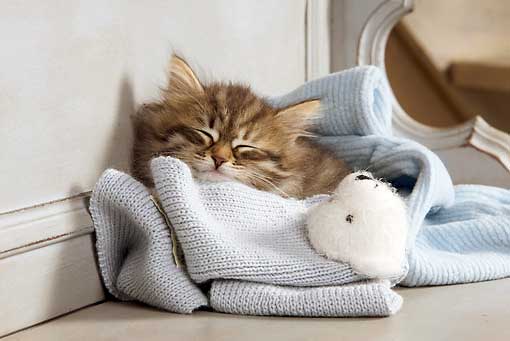
Caring for kittens in the first few weeks is vital to the physical and mental health of the kittens and this will include:
- Providing the most suitable sleeping arrangements
- Keeping them warm
- Keeping them clean
- Feeding the correct amount and type of kitten food
- Bottle feeding if necessary
- Providing socialization skills and experiences
- Weaning
- Looking after their general health
All of these subjects are discussed further in more detail in additional pages
What If There Is No Momma Cat?
Unfortunately things do not always go to plan, sometimes the mother cat is unable to care for her kittens or you may find yourself looking after orphans. In either case some extra special kitten care from you will be needed.
Orphan kittens - Until a kitten is weaned they are pretty much dependant others to stay alive. If the mother cat is not around then it is up to us to provide everything they need Including:
- Hand bottle feeding - This can be tricky so I have written a page to help you with the correct techniques, food preparation and equipment you will need.
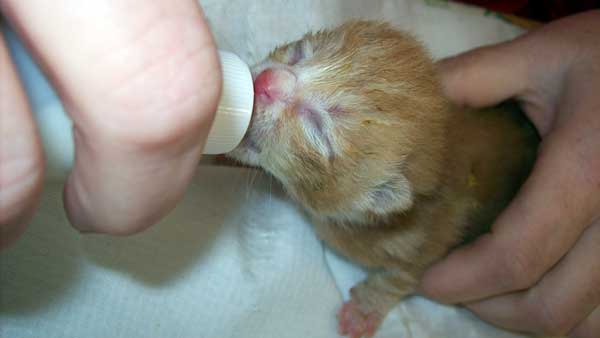
- Toilet Stimulation - yes I'm afraid so. very young kittens need help to pass urine and faeces. This is a simple process which needs to be done after each feeding.
Kitten health can be a worry but with a little vigilance can be looked after easily. Once the first few weeks are over and the kitten is more mobile and able to look after themselves a little more, you can start to relax and enjoy your kittens antics which I can assure younwill keep you smiling.
Early Lessons

Most cats are excellent mothers and will teach her new brood all the catty things they need to know. But as responsible owners, we must learn what we can about caring for kittens and stand by to give her a helping hand.
The mother cat will teach her kitties about:
- Hunting Prey
- Play
- Toilet training
- Which food to eat
Your kitten care role with these lessons are:
Weaning - When the kittens are ready to move on to solid food (around six weeks, sometimes later), you will need to provide especially formulated kitten food for them. These days, well balanced kitten food can be purchased at supermarkets and pet stores, or you can speak to your vet for more expert guidance.
If you have a kitten who needs weaning and does not have a mother around to help, I have some useful tips on how to do this on my hand weaning page.
Toilet Training - Kittens will start to use a litter tray around five weeks old. They will watch their mothers and copy her behavior.
It it is a good idea to provide a low sided tray at first with soft litter, which will be easier for the kitten to to dig into and will not hurt their paws and put them off. If they have only positive experiences of using the litter tray during this time it will avoid any toileting issues later on.
Sometimes you may have to help some kittens to get used to the litter tray. For more information about teaching a cat to use a litter tray please see my article about litter tray training.

Play - Play is an important part of your kittens learning to be a cat. Don't worry you are not teaching them to hunt, that is a natural instinct and will happen anyway, you are simply teaching them the difference between play and hunting.
Believe it or not there is a wrong way to play with a cat or kitten. Play pouncing and hunting games with your kitten but never let them play with your hands. This could develop into a learned behavior and although it doesn’t hurt now when they are young, it certainly will when they are fully grown. It will be very difficult to reverse this behavior later on in life and by not encouraging this type of play now will avoid problems in the future.
For some ideas I have some tips on on my playing with your cat page.
Kitten Care, Not Punishment.
It is very tempting for kitten and cat owners to punish their pets when they do something wrong, just like we might with our own children. However cats do not have the same understanding of punishment.
They do not automatically associate a punishment with a certain misdemeanour instead they will associate it with the person. So instead of providing a positive outcome i.e. stop chewing the chair for example, you are creating a negative one between your cat and yourself.
This can lead to aggression towards you and even avoidance, which in some extreme cases could result in the cat going off to find new owners.
So from an early age it is important to practice these rules and teach your furry youngster the right and wrong way to behave.
Reward good behaviour always with a positive experience, something that your particular cat really enjoys. It could be:
- A treat
- A game
- A cuddle
Reward bad behaviour with a negative experience by taking something away that your cat enjoys. The most powerful of which is the removal of attention. So:
- Stop playing the game immediately
- Walk away from the kitten, preferably out of the room.
- Remain silent
- Have no eye contact with the kitten
The cat will perceive this as a bad experience and will not want to repeat it.
Final Words On Kitten Care
Caring for kittens can be a fun and rewarding experience and it is made much easier these days as everything we need to look after them nutritionally and medically is so easily accessible. Special kitten food can be bought from every supermarket and our local vets can carry out vaccinations and neutering relatively cheaply and easily.
But too often the important aspects of socialization and early training experiences are overlooked. When done correctly from the beginning, giving the right type of kitten care will prevent many future behavioral problems and so help ensure that you have a confident and contented cat who will bring many years of happiness to you and your family.
I'd love to hear what you think of this page or my site. Let me know if you like what you have read or if it has helped you with a problem.
It's easy to do just leave a comment in the box below and click the like / share or +1 to let others know about my site. Thank You It really is most appreciated.
FYI: As an Amazon Associate I earn from qualifying purchases.
Follow Our Happy Cat
Follow Us

Search This Site

Recent Articles


-
Smokey my cat
Mar 20, 24 02:32 PM
 Smokey is very laid-back and his personality shows for itself. Loves to lounge and sit with me when he explores around outside because of his curiosity



New! Comments
Have your say about what you just read! Leave me a comment in the box below.