- Home
- Fleas
Cat Fleas - How To get Rid Of The Little Blighters
Cat Fleas are a very common problem and most cats will become infected at least once during their lifetime. It's nothing to be ashamed of, it doesn't mean you have a dirty house.
In fact we have had to deal with a pet flea problem at least once with every cat we have ever owned.
Cats can pick up these little parasites from a variety of sources at any time of the year, the main ones being:
- Other cats and dogs they come in contact with.
- Hedgehogs and rabbits found during their nocturnal garden wanderings.
- Second hand furniture may also harbor some unwanted pet fleas as they can survive quite some time without being anywhere near a cat.
Why You Should Control Cat Fleas!

There are lots of good reasons for getting rid of cat fleas including:
- Making sure you don't pass cat fleas onto anyone else.
- Prevent your cat getting tapeworms which the flea carry the larva of.
- Prevent other nasty infections which the flea can pass on to your pet.
- Stop fleas infesting your home.
Because adult fleas feed on your cats blood they can cause severe anaemia especially in young kittens. this can actually result in death for your cat if not treated early.
Some cats can be allergic to the cat flea bite. Our cat Mo was and it was terrible to see her scratch herself almost to bleeding and running around the room frantically trying to get away from the discomfort she was obviously in. We took her to the vets straight away for treatment.
Flea control for both you, your cat and your home should be a priority.
Find out more on my page about flea Control.
Does Your Cat Have Fleas?
Even indoor cats can pick up fleas due to the fact that fleas are great at hitch hiking a ride from anything which comes its way. So keeping an eye out for tell tell signs of an infestation is always important.
So how can you tell if your pet does have cat fleas? Sometimes it is very obvious that your cat has fleas, sometimes less so, but the main signs are:
- The first sign is usually noticing your cat repeatedly scratching and being a little edgy and dashing around the room suddenly as if bitten (which they probably have been)
- You may notice bites on your own ankles, little red itchy marks are the main indication.
- You may see them on your cats fur. They look like little reddish brown pin head size particles on the fur. Most commonly around the neck and tail areas.
If you see any of these symptoms or even if you just want to make sure your cat is flea free, the best thing to do is to buy a special flea comb and stand your cat on paper while you gentle comb through their fur. A couple of fleas may get caught in the comb but you are more likely to find flea droppings. They are black in colour and when squashed will contain little amounts of blood. Yuk!
This short video shows you how to use a flea comb to check your cat.
Prevention Is Better Than Cure
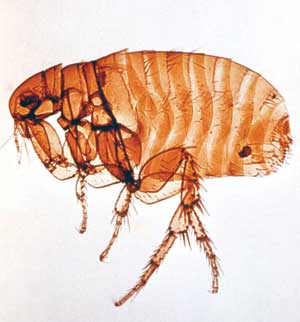
The best way to prevent cats with fleas is to make sure your pet never gets infested in the first place. This will prevent a lot of bother and fuss for both you and your feline friend and makes sure you have a happy cat.
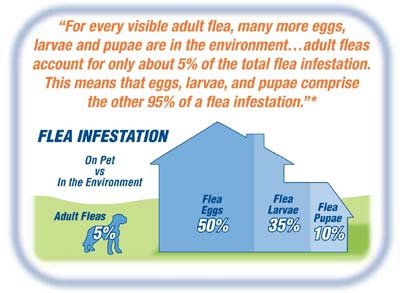
- Your first step is to make sure you know what you are dealing with and so finding out about the life cycle of the flea with help you understand the problem and so be able to tackle it more effectively.
- Preventing cat fleas in the first place also start's with a clean environment for your cat to live in. Regularly cleaning their bedding and vacuuming the whole house will help to remove any eggs which may be lying dormant.
- Good cat nutrition is also vital. It has been observed that cats in poorer health and in a weakened state are more prone to flea infestations. So making sure your cat is in tip top condition and being fed the best quality food will also help prevent the little critters from invading your home.
- Grooming your cat regularly can also help prevent fleas becoming a problem as you will be able to remove any eggs which may be caught in the fur. The eggs are quite sticky and so are more difficult to remove by your cat alone. Regular brushing and the use of a fine comb will help remove any eggs.
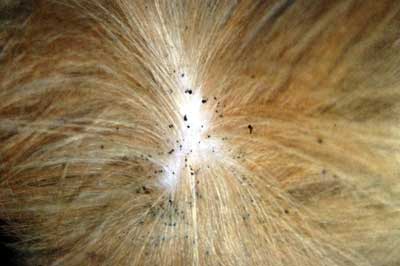
This picture shows flea dirts on your cats skin. This cat has a bad infestation as you would not normally see so much by simply parting the fur. To double check that they are flea dirts, simply dab them with some water. they will dissolve and leave a red mark which is the cats blood.
- The simplest way to prevent fleas is to treat your cat with a special flea repellent/killer which is dabbed onto the skin on the back of the neck. This needs to be done once a month to ensure continued protection. There are several different types of flea treatments available both over the counter and from your vet.
My personal favorite is a brand called Advantage which has proved to be very effective for my cats.
Find out more about Advantage flea treatment and why I like it here.
- You could also use a flea collar for your pet. However some cats may be allergic to the collar. If you do use one look out for signs of a rash around your cats neck just in case they are. I personally would recommend you try something else other than a flea collar as they can have some terrible side effects. My cat rescue friend in America has seen some terrible reactions to these collars and she tells us about her experiences with flea collars here.
Getting Rid Of The Critters
Once you know for sure that your cat does have fleas it is important that you treat both your cat and your home as soon as possible. While doing this is it is good cat care to make sure you eradicate them for good, so as not to have a re occurrence of the problem in a few months time.
- Firstly, you will have to treat the cat fleas on your cat and any other animals in the household. There are a number of powders and sprays available for you to choose from, but look out for ones that say they kill fleas quickly.
Find out more about these various products here.
Follow the manufactures guidelines, but usually it will involve you combing through your cats fur whilst applying the products.The neck area is where fleas are usually worse; so pay special attention to this area being careful not to get any products into their eyes or ears.
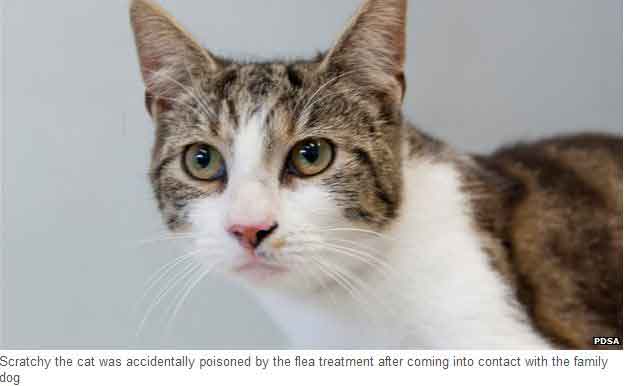
Be careful that you use only the correct product for your cat. There have been cases of poisoning when products containing permethrin have been used accidentally on cats.
You might like these
Cat Flea Collars - The Dangers, A True Story
Cat flea collars have hidden dangers. Read This cautionary story of a cats very bad reaction to a flea collar.
Flea Treatment Poisoning Warning
Watch Out For Flea Treatment Poisoning. Some dog flea treatments can be highly toxic to cats.
Flea Treatment For Your Home
Find out what flea treatment is best for getting rid of fleas in your home.
Flea Life Cycle - Know Your Enemy
Find out about the cat flea life cycle and understand how you can prevent your cat and home being infested.
Flea Collars And other Cat Flea Treatments
Find out what treatments are available for the treatment of fleas, from flea collars to spot on treatments.
Cat Flea Control – Protect Your Feline Friend And Your Home
Discover why cat flea control is so important and how you can keep on top of the problem for good.



I'd love to hear what you think of this page or my site. Let me know if you like what you have read or if it has helped you with a problem.
It's easy to do just leave a comment in the box below and click the like / share or +1 to let others know about my site. Thank You It really is most appreciated.
FYI: As an Amazon Associate I earn from qualifying purchases.
Follow Our Happy Cat
Follow Us

Search This Site


Recent Articles


-
Smokey my cat
Mar 20, 24 02:32 PM
 Smokey is very laid-back and his personality shows for itself. Loves to lounge and sit with me when he explores around outside because of his curiosity




Advantage Flea Treatment
for your cat
New! Comments
Have your say about what you just read! Leave me a comment in the box below.