- Home
- Pregnancy
Cat Pregnancy And Cat Mating
Cat pregnancy and the whole cat mating process can be rather worrying to owners who have never experienced their pet having kittens before. I know I was reaaly anxious the first time too.
However generally most pregnant felines, even first time mothers will be able to cope with the whole process themselves.
The main worries for owners are:
Am I feeding her the right food?
How long till the kittens arrive?
Do I have to do anything to help her?
What should I provide for my cat?
The most important thing you can do for your queen (mother cat) is to be there for her and to let her know you are nearby. This will keep her calm during the birth.
Guide to this page
Signs of a cat in heat / Cat mating / Signs of pregnancy / Special care required / length of pregnancy / The birth / Problems
Is My Cat In Heat?
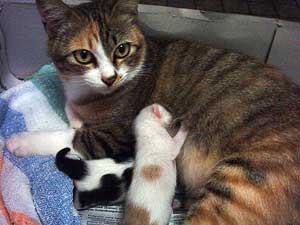
If you have never seen a female cat in heat before it can be a bit worrying at first. in fact many people think their cat is sick and take them to a vet for treatment.
There are some obvious signs that your cat is in heat and I have written a full article about all the things to look out for and how often you can expect your cat to be in heat. See my article here.
Cat Mating
Of course before your kitty becomes pregnant there will be a period of time where she is in heat and displaying all the usual signs of this. During this time there will be a period of mating which can last for many weeks until she has been fertilized, even then it may continue for a few more days afterwards.
The mating process can be a little disturbing to some owners as it can look rather brutal and you may worry for your female cats health. However by understanding the mating process you will realize there is nothing to worry about.
If you are interested in finding out more about the mating ritual please see my article about it here.
What Are The Signs Of Cat Pregnancy?
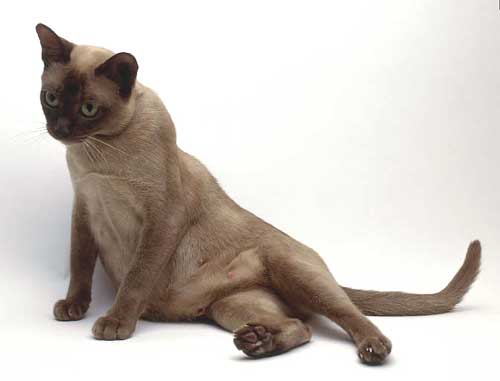
So how do you know if your cat is pregnant or not?
The first signs of a cat pregnancy are:
- Your female cat in heat process stops.
- She may start to demand more food than usual.
- At 3 to 4 weeks into her pregnancy her nipples will start to enlarge and turn a purplish pink.
- Her abdomen will start to swell and she will put on weight. However this may not start to show much until much later into the pregnancy.
To be completely sure that your cat is pregnant, take her to be examined by your vet. However your vet will only be able to feel the kittens inside your cat from around the week 3 or 4 of the pregnancy. It is not advisable for you to try and feel your cats abdomen for the kittens as you could harm them.
Later in the cat pregnancy your cat may start to show maternal behaviour, such as carrying toys around and trying to 'mother' them. This is often a good indication that she is getting close to giving birth.
Does My Pregnant Cat Need Extra Care?
It is important to ensure that your cat is as healthy and strong during her pregnancy for several reasons. The kittens will be born healthy and your queen will be strong enough to take care of them and produce enough good quality milk.
There are several things you can do for your pet to make sure the pregnancy and the kittens are healthy.
- Feed a good quality cat food during and after pregnancy. Although the top brands should be good enough there are specially prepared foods which are designed to give the pregnant cat optimum nutrition. See my cat food page for more information.
- Towards the last third of the cat pregnancy your cat may start to demand more food more often. This is OK and you can feed small meals on demand, up to four times a day.
- If you make your own pet food then a calcium supplement may be recommended as well. Supplements have several benefits, they keep your own cat healthy and strong so that she can look after her kittens and feed them good quality milk.
They also help to ensure that the kittens are born healthy. A supplement like this is worth considering. - Worm your pet monthly and ensure the flea treatment you use will not harm the kittens (check with your vet).
|
Halo Vita-Mineral Mix Dog & Cat Supplement A delicious supplement, made of all raw food ingredients, to enhance the nutritional value of your pet's meal. |
A delicious supplement, made of all raw food ingredients, to enhance the nutritional value of your pet's meal.
How Long Is Gestation?
Cat gestation (the term of the cat pregnancy from conception until birth) lasts for about 61 to 68 days (approximately two months or nine weeks). If kittens are born before this time they may require specialised nursing. See my page for more Information about the cat gestation period and a table for the possible dates of birth.
Your feline will continue to behave normally right through her pregnancy and even during the last few days. Even a heavily pregnant cat will still like to jump around and chase balls.
About a week before the birth, your pregnant cat will start to show signs of preparing herself a place to give birth. She may start to sleep in a different place or even start to take toys of clothing etc to a specific place in the room.
It may be an idea to help your cat out by preparing a nice warm and cosy open top box and placing it in an out of the way place. Cats like quite and to feel safe when they are giving birth.
The Birth

Watching a cat give birth can be a rather nerve racking experience for a cat owner who has never had a pet give birth before.
Often this anxiety can upset the queen too and so it is important to remain calm and quiet around your cat at this time to allow her to settle and feel relaxed.
Although as a cat owner there is normally not much for us to do to help your cat through her labour, it is necessary to understand the birthing process so as to know when to step in if required. I have more on the birthing process on my pregnant cat and labour page.
Wherever her bed is, ensure that it is warm and at least above 22 degrees Centigrade or 72 degrees Fahrenheit, otherwise it will be too cold for the kittens.
What Problems Might Occur During Cat Pregnancy?
Most cats give birth naturally with no complications. However with all things in life sometimes things go wrong.
If anything does happen during the cat pregnancy or after birth it is advisable to seek the advice of your vet as soon as possible.
Here is a list of some of the possible complications which can occur.
Miscarriage / natural abortion: This will show with a bloody discharge and is more common in cats infected with the feline leukaemia virus (FLV).
Re-absorption of the foetuses: Sometimes the eggs stop developing and are reabsorbed by the body.
Primary Inertia: This is when your cat fails to give birth by the 65th day. You should take her to the vet or call them out for a check-up.
Secondary Inertia: Call the vet as an emergency if your pregnant cat becomes exhausted during delivery and stops straining.
Obstruction: If your cat has been straining for 30 minutes to an hour without giving birth, call your vet as an emergency.
Kittens
Now the kittens have arrived, it's no time to relax (well you can a little bit and go all gooey over your new furry family). Please see my section on kitten care for help on how to look after your new brood.
I have a page of common cat pregnancy questions which i have answered which may help further.
I'd love to hear what you think of this page or my site. Let me know if you like what you have read or if it has helped you with a problem.
It's easy to do just leave a comment in the box below and click the like / share or +1 to let others know about my site. Thank You It really is most appreciated.
FYI: As an Amazon Associate I earn from qualifying purchases.
Follow Our Happy Cat
Follow Us

Search This Site

Recent Articles


-
Smokey my cat
Mar 20, 24 02:32 PM
 Smokey is very laid-back and his personality shows for itself. Loves to lounge and sit with me when he explores around outside because of his curiosity




New! Comments
Have your say about what you just read! Leave me a comment in the box below.