Orphan Kittens
How Should You Hand-Raise A Kitten?
Orphan kittens are luckily not that common and most queens are able to look after their entire litter successfully.
However there are times when this does not happen and we may have to step in to take over the role of providing the necessary kitten care.
Discover on this page:
- Who Should Foster An Abandoned Kitten?
- Persuading Another Mother Cat To Except A New Kitten
- Warning Signs
- Caring For Your Kittens
A kitten may become orphaned or abandoned by it's mother for a variety of reasons, including:
Mother cat is killed or dies - This is the most common way you may get a litter of orphan kittens. This may be caused by being hit by a car, being attacked by a dog or in rare cases suffering from complications during the birth.
Mother cat abandons her litter or the weakest kittens - This is rare and most cats are happy to provide all the kitten care for their brood. However a few first time mothers may become afraid of the new situation and may even become hostile towards their litters.
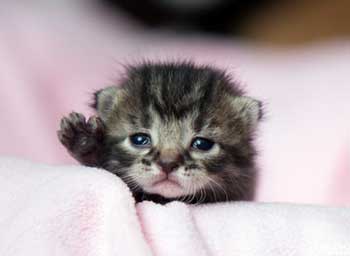
The Mother cat is unable to produce milk or enough of it to nourish her litter. - There are several reasons why this may happen:
- The queen is under nourished herself.
- Mammary gland inflammation
- Mammary gland Tumours
- Milk fever (Lactation Tetany or Hypocalcemia)
The litter is large and the queen is unable to care sufficiently for all of them - The average litter size for a domestic cat is between 4 to 6 kittens. If after a few weeks it is noticeable that a few kittens are not receiving as much food as the others, it is important not to remove them from the litter but to provide extra nutrition for them.
Who Should Foster Orphan Kittens?
If at all possible, the best solution to looking after orphan kittens is to find another queen who is still lactating to take over their care. This can be difficult as you need to find a queen who doesn't have a large litter herself and is at the same stage with her own kittens.
To try and find a suitable queen, check with:
- Local humane societies
- Animal wardens
- Catteries
If you are lucky enough to find a suitable queen you will have to adopt her and her existing brood if she is looking for a home. Persuading her to except the new kittens is never certain and so you may end up hand rearing them yourself, however it is always worthwhile making the effort to persuade her.
Persuading A New Queen To Except Orphan Kittens
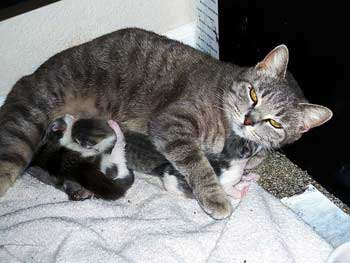
- Place the new queen in a separate room away from her own litter where she cannot hear or smell them. Give her some food and water.
- Place the kittens into a box with the queen's own kittens and bedding.
- Leave them for an hour or two, this will give them time to pick up the smell of the queens kittens and herself, and also the queen will be eager to get back to her kittens.
- Reintroduce the queen.
If she hisses at the new kittens repeat the process again for another hour or so.
(Remember that the kittens will need to nurse after 2 or 3 hours, you may have to remove the new kittens and hand feed them yourself while this happens).
Hopefully with persistence the queen will finally accept them.
If you do end up having to foster the orphan kittens yourself, it is important that you monitor their growth and development.
Make a record for each kitten and get used to weighing them and checking them over daily until they are weaned.
Warning Signs To Watch Out For
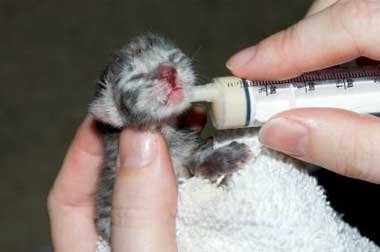
Knowing when one of your kittens is sick can sometimes be difficult especially at first when they do nothing much but sleep and eat.
Here are a few warning signals to watch out for:
- They feel cold
- They feel thin
- They may be limp when picked up and remain still
- They may be lying separate from the other kittens.
- They stop nursing
- They may cry weakly or incessantly for no reason
If you suspect your kitten is ill or failing then ensure that they are kept warm (not too hot, especially if they are less than three weeks old as they cannot regulate their own body temperature yet), make sure they receive extra water in case they are dehydrated and see a vet as soon as possible.
Caring For Your Kittens
Now you have become mother cat, you will have to know what a real queen does to look after her litter and find a way to replicate her natural kitten care as closely as possible.
A queen will:
- Provide warmth with her body
- Stimulate tummies to encourage elimination
- Ensure a clean living environment
- Keep them safe
Kittens have a very strong sucking reflex and will suck on anything even if it does not provide nourishment, so orphan kittens must be housed separate from any other siblings.
Some very nasty damage can be done to litter mates ears and genital areas due to inappropriate sucking.
Providing separate beds for them will also help to keep them clean and make monitoring them easier. A simple cardboard box with soft paper towels or washable cloth baby nappies (newspaper is not absorbent enough and is too harsh for really young kittens who can scratch their delicate navel area) is all that is needed during these early weeks.
Make sure the box is deep enough to ensure that the kittens cannot climb out by themselves, but do keep the top of the box open.
Place the boxes in a warm, draft free location. Kittens need to be kept at normal body temperature all the time for the first three weeks of life. If your room is unable to ensure this temperature then use a normal heating pad placed under the box (not inside the box) and only on one side of the box so that if the kitten gets too warm they can crawl to the cooler side.
Always check the temperature of the box and the kitten at regular intervals to ensure the correct temperatures. Bedding areas should be around 95 to 100 degrees Fahrenheit.
Make sure that any soiled bedding is replaced as soon as possible, this may have to be done two or three times a day.
For the first few weeks of life a kitten needs help to urinate and defecate. I have instructions on how to help your kitten go to the toilet in my article here.
I hope you have found all my kitten care tips and advice useful! Hopefully, if you do find yourself in the position of looking after some orphan kittens, you will feel a bit more confident about what to do. Don’t forget to check with your vet if you have any concerns.
Top of this Orphan kittens Page
FYI: As an Amazon Associate I earn from qualifying purchases.

Search This Site

Recent Articles


-
Violet and Pepper
Dec 18, 24 09:25 AM
 It was 2018, and we went through many losses with our pets. In early October (namely on October 1, 2018), our cat Maggie was suffering from a horrible